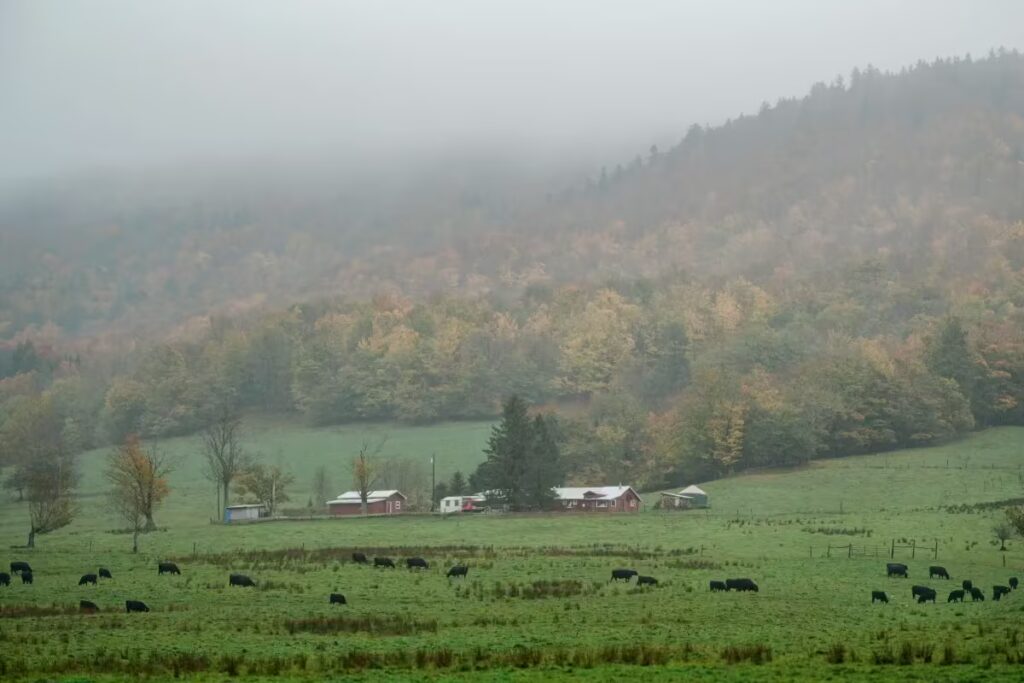
DAVIS, W.Va. — The Monongahela National Forest covers nearly a million acres of rugged mountains in eastern West Virginia. It connects well-known natural spots, from the ski slopes of Canaan Valley to the dark skies at Blackwater Falls and Spruce Knob. Small towns like Davis and Thomas serve as gateways for visitors.
For the past seven months, Kaleb Skelton, his wife Ella, their 2-year-old son Ryder, and their dog Mabel have lived in a camper in this part of West Virginia. Kaleb is wrapping up a seasonal job as a campground manager on a lake near Spruce Knob, the state’s highest point.
On clear nights at that isolated peak, they see a dense band of stars. The area is one of the few remaining dark pockets in the Eastern United States. Amateur astronomers now seek it out.
During summer new moons, Kaleb says, one in four campsites he manages holds someone with a telescope. He once thought his family’s cabin in eastern Texas had the darkest skies he had seen. “Coming out here definitely rivals it,” he said.
Logging and coal left lasting scars
Those black nights and the landscape around them now face a new threat. Many residents compare the plans to the logging and mining that once shaped the region. Tourism, outdoor recreation, and community life are tightly linked here. A large power plant and data center campus in nearby Tucker County would bring major development into the middle of it.
An 1885 photo of Davis from the height of logging shows a few low buildings in a wide clearing covered with forest debris. Locals called it “Stump Town,” said Kim Williams, president of the Snow Sports Museum of West Virginia in Canaan Valley. At the turn of the century, huge first-growth trees covered the land.
Logging companies then clear-cut the whole valley and the surrounding hills, he said. By the early 20th century, entire mountainsides of red spruce and eastern hemlock were bare. Coal companies followed and left the nearby Blackwater River acidic and unsafe to drink.
The scars remain. The biggest trees will not return for generations. A century of natural regrowth, conservation, and restoration has put the land on a path toward recovery.
Few people expect the current tech boom to match the destruction of the past. Still, many see the proposed Ridgeline data center as a step backward that could undo the recovery the local community has achieved.
Project details and expansion plans
A roughly 785-megawatt generating plant is planned as the first part of “a large-scale data and energy infrastructure project designed to support artificial intelligence, cloud computing, and enterprise systems,” according to Purcellville, Va.-based Fundamental Data LLC, the company behind Ridgeline.
The complex would rely primarily on natural gas, with diesel as a backup. Power generated on-site, rather than bought from the regional grid, could ease some worries about effects on electricity rates. It does not resolve concerns about air and water pollution.
The site is a reclaimed coal-mining property. Plans start with 291 acres that could expand to 10,000 acres, or 15 square miles, and include parts of neighboring Grant County, according to local news reports.
Casey Chapman, listed in court documents as Fundamental Data’s “responsible individual,” spoke to NPR. He declined to guess at the facility’s final size. He said only that “if fully developed … it would be thousands of acres.”
| Aspect | Details from company and reports | Local concerns raised |
|---|---|---|
| Power generation | About 785 MW, mainly natural gas with diesel backup | Air emissions and health impacts |
| Initial land | 291 acres on reclaimed mine site | Potential growth into surrounding areas |
| Possible expansion | Up to 10,000 acres, including parts of Grant County | Scale of industrial development |
| Permanent jobs (company estimate) | About 500 in IT, electrical, cooling, engineering, and security | Brookings study average of 100-200 permanent jobs per data center |
| Lighting | “Well-designed” lighting to limit sky glow | Analysis showed possible 528% increase in sky glow near Blackwater |
Light pollution is a common complaint from people living near data centers. Chapman says the company will use “well-designed” lighting to help limit sky glow. The goal is to avoid jeopardizing nearby Blackwater Falls State Park’s effort to gain official dark-sky certification.
An analysis by the Northern Virginia Astronomy Club, which holds an annual star party in the region, found that Ridgeline’s initial footprint could increase sky glow near Blackwater by 528%. That would change its nighttime rural sky to something closer to a suburban area. The same analysis found only a minimal impact on Spruce Knob.
Safety and security take priority over light pollution, Chapman said. The facility will be “an industrial plant that runs around the clock.” Crews need proper lighting to operate and maintain equipment safely.
Local opposition and legislative changes
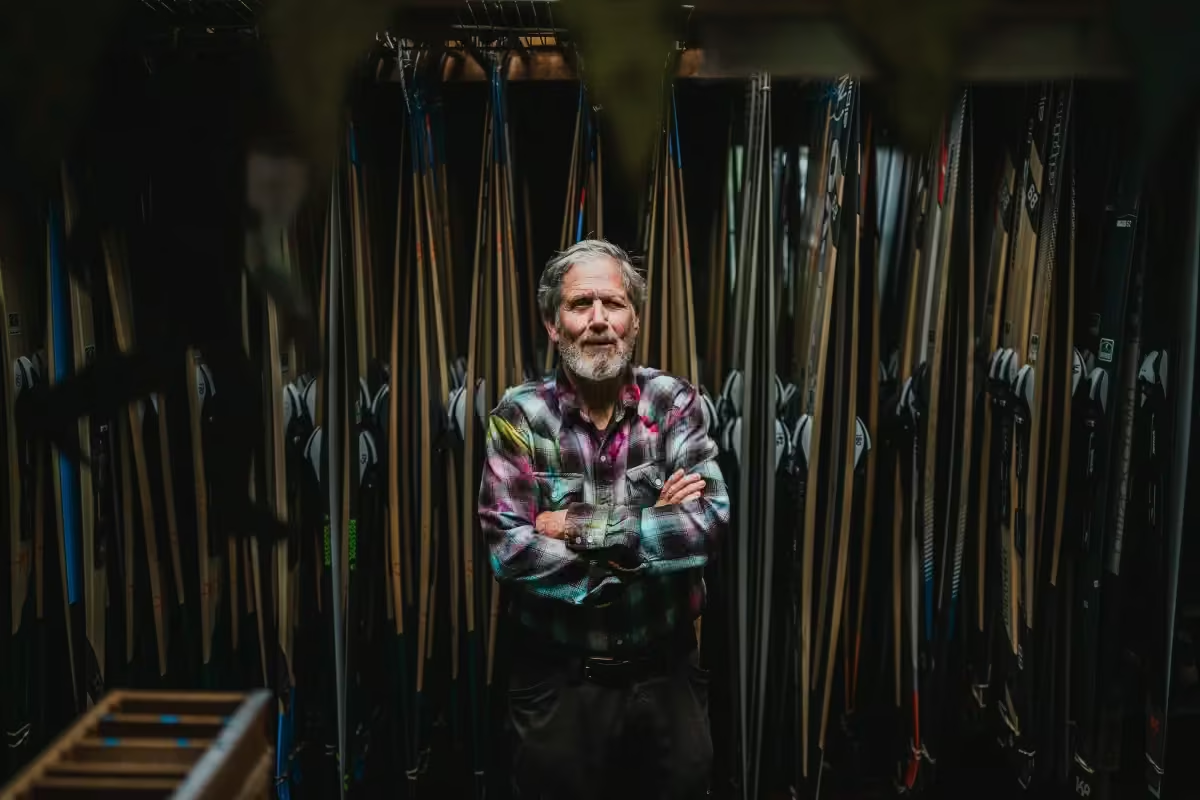
Chip Chase is among the skeptics. He runs White Grass Ski Touring Center, a popular cross-country ski area he helped found 45 years ago. He is a fixture in a local community he describes as “Vermont, with Southern hospitality.”
“If you’re an outdoor person, this place is paradise,” he said. “People come here to get away from data centers. People want dark skies here. People want to have a peaceful, quiet recreational area.”
Economic development is a top priority for West Virginia. The state ranks among the poorest in the country and has the unusual distinction of having lost population since 1950.
John Deskins, director of the West Virginia University Bureau of Business and Economic Research, says data centers could help. “As long as we’re making sure that we follow all the proper procedures around noise pollution, water pollution, [and] other elements of environmental pollution … I think they’re a good opportunity,” he said.
Those proper procedures worry people in Tucker United, a grassroots group opposing the data center plans. Like groups in other parts of the country, they are fighting what they see as a lack of transparency.
The first anyone in the community heard about the Ridgeline project was March 2025. An obscure notice appeared in a local newspaper announcing the request for an air-quality permit for a proposed power plant, said Davis Mayor Alan Tomson. A resident called him to ask if he knew anything about it. “I told her that I did not,” Tomson said. He then called the mayor of neighboring Thomas. “He also had not heard anything about it.”
From there, Tomson said, things moved quickly. A month later, the Republican super-majority in both houses of the state legislature passed a highly unusual bill. It exempted certified microgrid districts and high-impact data centers from county or municipal zoning or any local restrictions related to horticultural, noise, viewshed, lighting, development, or land use.
Permit approval and health concerns
Opponents quickly gathered 1,000 signatures on a petition urging Republican Gov. Patrick Morrisey to veto the bill. They were unsuccessful. Signing the legislation, the governor noted the state’s need to “continue to focus on economic development and utilizing our many natural resources.” He added that “companies will now be able to quickly build, expand, and increase job creation right here in West Virginia.”
“They completely got rid of any … sort of regulation or guardrails for these data center developments,” said Tucker United spokesperson Nikki Forrester. “They want to sell us out, … extract our resources and leave us with the mess.”
The West Virginia Department of Environmental Protection approved Fundamental Data’s air-quality permit. According to Tucker United and other activist groups, it did so without conducting a comprehensive assessment of the facility’s potential public-health impacts on the surrounding valley. When asked by NPR about Tucker United’s concerns, the West Virginia Department of Environmental Protection said it “does not comment on active litigation” and declined an interview request.
Opponents of the project later commissioned their own analysis. It found that the Ridgeline plant could cause between $19 million and $35 million a year in health-related damages and premature deaths.
Tucker United, the West Virginia Highlands Conservancy, and the Sierra Club challenged the air-permit decision in court. Their appeal was dismissed in August on jurisdictional grounds. The groups say they will go to the state’s Supreme Court.
Chapman said Tucker United’s air-quality study assumes Ridgeline will emit the maximum amount of pollution allowed by its air permit for an entire year. In fact, the permit sets an upper limit and “we’re going to operate within those limits,” he said.
There are other environmental concerns. Forrester noted that Canaan Valley’s bowl shape and temperature inversions can trap air pollutants near the ground. On water, she said, “storing 30 million gallons of diesel right on a creek that feeds into our water supplies is really dangerous and puts not just our community, but every community downstream at risk.”
Fundamental Data’s Chapman said the storage would be safe and that all of the tanks would not need to be filled at any given time.
In addition to the potential environmental and health hazards, many residents find it particularly galling that West Virginia House Speaker Roger Hanshaw, a Charleston-based attorney with the law firm Bowles Rice, is listed as lead attorney for Fundamental Data in the permit dispute.
“Here’s a guy who’s writing laws [and] sponsoring legislation while under contract for one of the people that he’s working for,” said Gary Berti, a retired homeowner in Davis. “To me, that’s a conflict of interest.”
In an email to NPR, Hanshaw stated: “I am not now, nor have I ever been, employed by Fundamental Data. I am a partner in a law firm. It is public record that the law firm of Bowles Rice is currently counsel for Fundamental Data in a litigation matter pending in West Virginia.”
Jobs, tourism, and community character
Fundamental Data believes building the Ridgeline facility would bring thousands of temporary jobs and about 500 permanent ones in IT, electrical and cooling systems, engineering, and security.
While no two data center campuses are alike, a Brookings Institution study found that on average, data centers produce around 100 to 200 permanent jobs.
Berti agrees that West Virginia needs jobs, but “there are places that need it more than others,” he said. He is skeptical that data centers would bring many permanent workers to the area.
If artificial intelligence ends up being more hype than substance, he said, it could repeat history. “A lot of times they leave us behind,” he said, referring to the coal and logging industries. “When I moved here 40 years ago, it was two rundown towns,” he said of Davis and Thomas. “Look at them now. They’re doing well.”
Given that history of exploitation, Tomson, the mayor of Davis, said he thinks the data center developer thought it could run roughshod over residents. But they got more than they bargained for, he said.
“This is a very educated community,” Tomson said. “Many of the people here that have retired had very high-level scientific and technological careers elsewhere, and they bring that knowledge and expertise to bear on this situation.”
Despite the organized opposition, some residents have voiced support. Tucker County Sheriff Jake Kopec thinks much of the criticism amounts to fear-mongering. The landfill for Davis and Thomas blocks the view of the Ridgeline facility from those towns, he said. “I really believe that you would drive past it and not even know it’s there.”
Kopec acknowledges that the dark skies will be less dark. But he said the county has more immediate needs that the Ridgeline facility would help remedy, including better-paying jobs and tax revenue to fund essential public services. “We have no cops on after midnight in this county, but we serve a million-plus visitors a year,” he noted.
Arts scene and past environmental fights
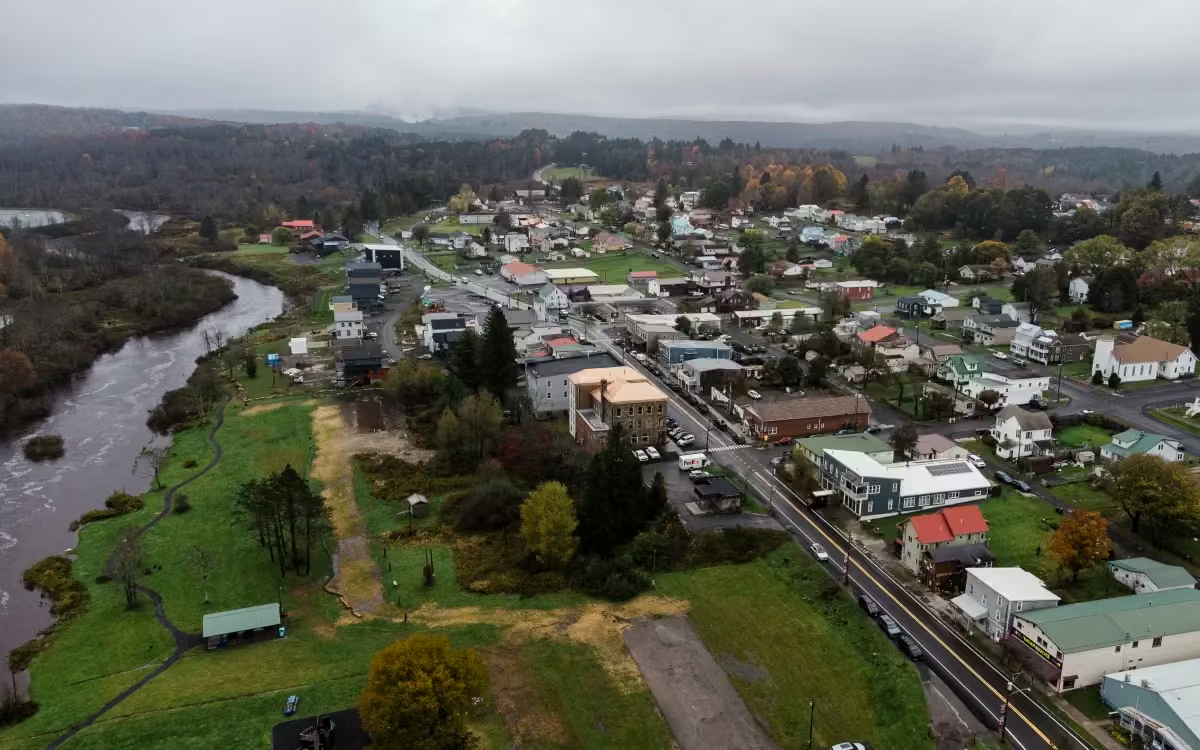
Davis and Thomas, both with populations of roughly 600 people, are not only a base for skiing, hiking, mountain biking, and whitewater rafting. They have also developed a lively arts and music scene.
“This area was just about written off,” according to Tomson. “And what ended up happening was music and artists discovered the city of Thomas, and there was a beginning of a resurrection of the area.”
On a Sunday night in October, well before the start of the ski season, there is a poetry reading at Creature in Thomas. A few doors down at the Purple Fiddle, a standing-room-only performance by Driftwood, an Americana/folk rock band from Binghamton, N.Y., draws a crowd.
Most of the hundred or so people in the bar are tourists like Adam Brooke, from Charlottesville, Va. He has been visiting the area for the past decade, taking in the mountains and the color of the fall leaves.
“We’re mostly hikers,” he said. “We just like getting out there on some of the lesser known trails and just enjoying nature for a bit.”
Despite the obstacles, opponents of the Ridgeline facility remain optimistic. They are encouraged by the growing national opposition to data centers.
In their own state, Gov. Morrisey, a strong advocate for data centers in the past, appears to be slowing down somewhat. He recently proposed a 20-year plan for “responsible” data center development. It is not much, Tucker United’s Forrester said, but it is something.
She also points to the region’s past grassroots successes. “Tucker County does have a long history of fighting bad development proposals … but we’ve been successful in every single one of them.”
Forrester and others point to two major environmental fights in the 1970s. One was a proposed hydroelectric project that would have flooded Canaan Valley and part of Dolly Sods, a protected wilderness area now popular with hikers and skiers. A second, at Otter Creek, saw the West Virginia Highlands Conservancy successfully challenge plans for coal exploration and road construction in the Monongahela National Forest. Both were halted.
Those victories are tempered by the region’s darker past, too, she acknowledged.
“They’re playing by the same playbook they’ve always played here,” Forrester said. “People don’t want to relive that history again, and they will fight every step of the way to make sure that doesn’t happen.”