The Pentagon’s top military planner admitted to leaking classified information about Ukraine and Iran to two reporters from separate outlets over a one-year period, according to an internal report of the investigation shared with Axios.
Why the firing matters
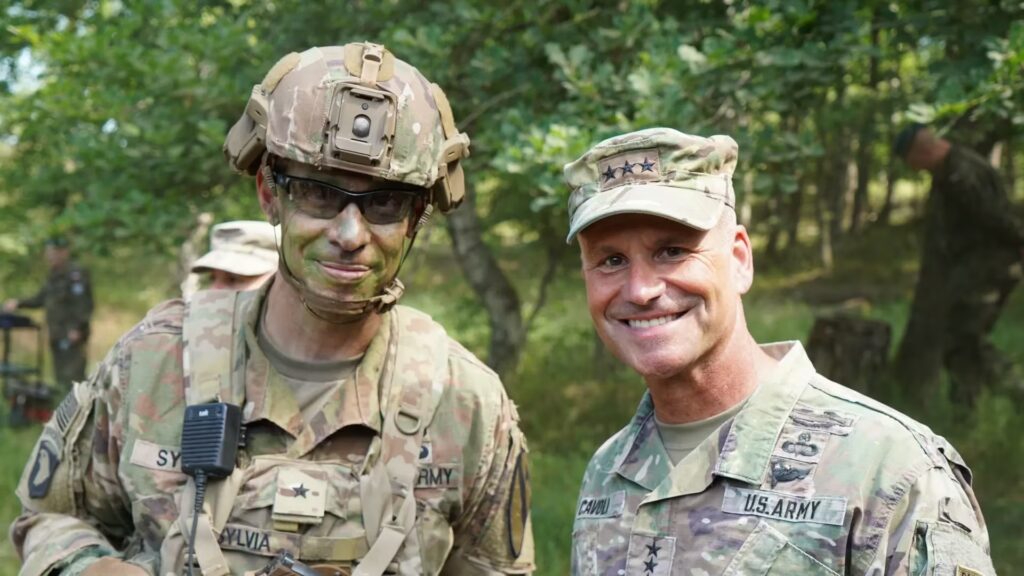
Army Lt. Gen. Brett Sylvia was fired this week by Defense Secretary Pete Hegseth for the alleged misconduct. The career soldier acknowledged the disclosures on video after he failed four polygraph tests, a U.S. official said.
The report stated that Sylvia had trouble passing multiple polygraph interviews. It accused him of making unauthorized disclosures to the media. He was cooperative when answering questions about his interactions with reporters and provided his personal phone for a forensics examination.
| Key Detail | Information |
|---|---|
| Individual | Army Lt. Gen. Brett Sylvia, Pentagon’s top military planner (J5) |
| Action taken | Fired by Defense Secretary Pete Hegseth |
| Allegation | Unauthorized leaks of classified information on Ukraine and Iran to two reporters |
| Timeframe | Over one year, beginning as early as June 2025 |
| Polygraphs | Failed four tests; admitted on video |
| Methods | Signal app and one in-person meeting at Silver Diner in Arlington, Va. |
Details of the leaks and meetings
The report and U.S. officials said Sylvia’s leaking began as early as June 2025, before mainstream media outlets were removed from the Pentagon, and continued afterward via the secure Signal app and once at a Silver Diner in Arlington, Va.
The meeting at the diner occurred because the reporter’s access to the Pentagon was revoked between meetings. During that meeting, Sylvia relied on notes he took while reviewing a classified secret report to orally provide information on U.S. assistance to Ukraine.
The reporter in question was writing a book and met with Sylvia twice. The general did not coordinate these meetings with the Pentagon’s Public Affairs Office or seek to have the information reviewed before providing it to the reporter.
Signal messages and deleted records

U.S. officials suspect that Sylvia intentionally deleted any trace of contact on Signal between him and one of the reporters but pretended it was an accident.
Sometime between June or July, Sylvia received Signal messages from the reporter. He is unable to recall exactly what was in that message, but he believes it had something to do with Iran. He stated that he did not respond to the message and instead deleted it. While deleting it, he believes he deleted the entire message thread, erasing Signal messages and phone calls that would have been recorded on his personal phone.
For another story, the report said Sylvia admitted to being one of the 20 officials cited in a story criticizing Pentagon leadership.
Internal responses and disputes
Another U.S. official told Axios that Acting Army Secretary Adam Telle and his office lobbied the Joint Staff to put out a statement supporting Sylvia to minimize the damage about any future claims of him leaking classified information. After someone within the Defense Department revealed to the Joint Staff why Sylvia was fired, the Joint Staff retracted its statement.
An Army official disputed the notion that Telle’s office pushed for a statement supporting Sylvia. “This is the latest in a coordinated campaign of lies designed to sow chaos,” the Army official said. “Acting Secretary Telle and his office did not advocate for any statement regarding LTG Sylvia. This entire narrative is false.”
Broader crackdown on leaks
Sylvia’s dismissal marks the latest crackdown on leakers and the press from Hegseth’s Pentagon. In July, the Defense Department announced a joint task force with the Justice Department that aimed to identify Pentagon leakers. It also called on the Pentagon’s Office of General Counsel to prioritize prosecutions of those who make unauthorized disclosures to the media.
Last year, in response to restrictive rules imposed by the Pentagon, several defense reporters and media outlets turned in their media passes.
Sylvia did not immediately respond to a phone call, voicemail, and text message left at the phone number listed for him in public records. This story has been updated with a comment from an Army official.