
Blog
Man Who Didn’t Stop for Directions Changed History
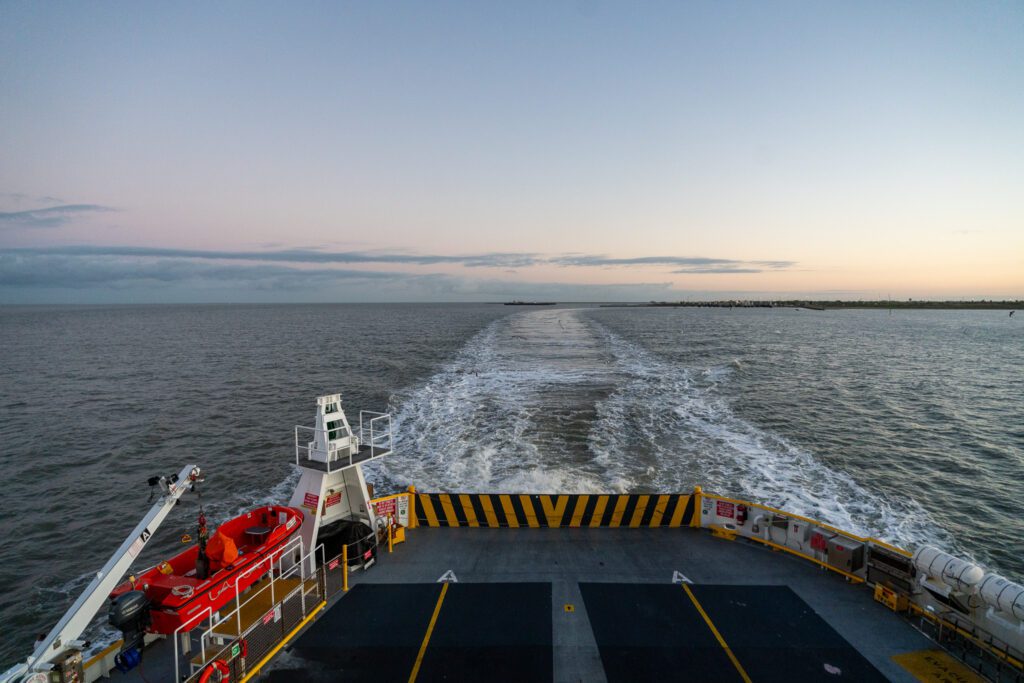
A view of Galveston Bay where La Salle sailed.
Photos courtesy Andy Chandler
Could a faulty 17th century map and an arrogant explorer who didn’t bother to ask for directions really lead to Texas being claimed as part of the US during its 1836 fight for independence? Could it have led to the second international war the United States ever fought? Could a failed colony of French settlers have meant the difference between Texas being a Spanish speaking culture versus French speaking culture?
Yes.
History is rarely a cause and effect, and it’s rarely the linear transpiring of a grand plot. Mostly, it’s the result of dumb luck or sheer stupidity.
Enter René Robert Cavelier, Sieur de La Salle. For ours sake: La Salle.
Born into aristocracy in 1643 in Rouen, France, La Salle originally was accepted into the Jesuits, in 1660. After arriving in New France in 1666 (yes, those three digits are correct) he was released from his vows citing “moral weakness.” One can only guess he enjoyed chasing adventures, and something else.
La Salle was an explorer, and in 1682, he completed the journey the 1540 De Soto Expedition and the 1672 Jolliet-Marquette Expedition started on to travel the entire Mississippi from Lake Michigan to now New Orleans.
The Sun King Louis XIV of France was so impressed that in 1684 he sent La Salle with four ships and 300 people to start a colony at the mouth of the Mississippi in present day New Orleans.
This was not the Mississippi expedition.
In an odyssey that resembles the Final Destination and the Saw movie series combined: one of the ships was captured by pirates, another sank due to a drunken captain, and a third turned around and headed back to France. La Salle overshot the Mississippi by 500 miles and sent a group of men ashore to explore near what is now Galveston Bay, most likely thinking they were at the Mississippi. Those men were never heard from again.
This left La Salle with one ship, the La Belle, and about 140 of the original 300 settlers near Port Lavaca, TX. He established Fort St. Louis and set out exploring to find the Mississippi. Still unwilling to stop for directions; he went the wrong way again, west, and made it as far as Goliad before turning around.
The colony failed. The La Belle ran aground and was destroyed. La Salle was shot by his own men in 1687, and in 1689 the colony had scattered to the four winds. Fifteen of the original settlers survived and fled to France, Illinois Territory, and New Spain.
Though a failure in every way imaginable, the La Salle expedition was consequential. Strategically, the expedition’s failure bought Spain time to settle Eastern Texas. France would finally settle New Orleans in 1718. This is why the culture and language of Louisiana is very French/Creole, and the culture and language of Texas has its roots in Spain.
Though the whole region would flip multiple times, most notably in 1763 with the Treaty of Paris and the 1803 Louisiana Purchase, the cultures continued.
Also, though the expedition failed, the land claim by La Salle fueled an argument the US settlers made in 1835 during the Texas Revolution and again in 1846 during the Mexican War, that Eastern Texas was theirs at the Louisiana Purchase.
That argument violated the 1819 Adams-Onis Treaty, but… Manifest Destiny!
All this is because someone two centuries earlier misread a map and didn’t stop for directions.
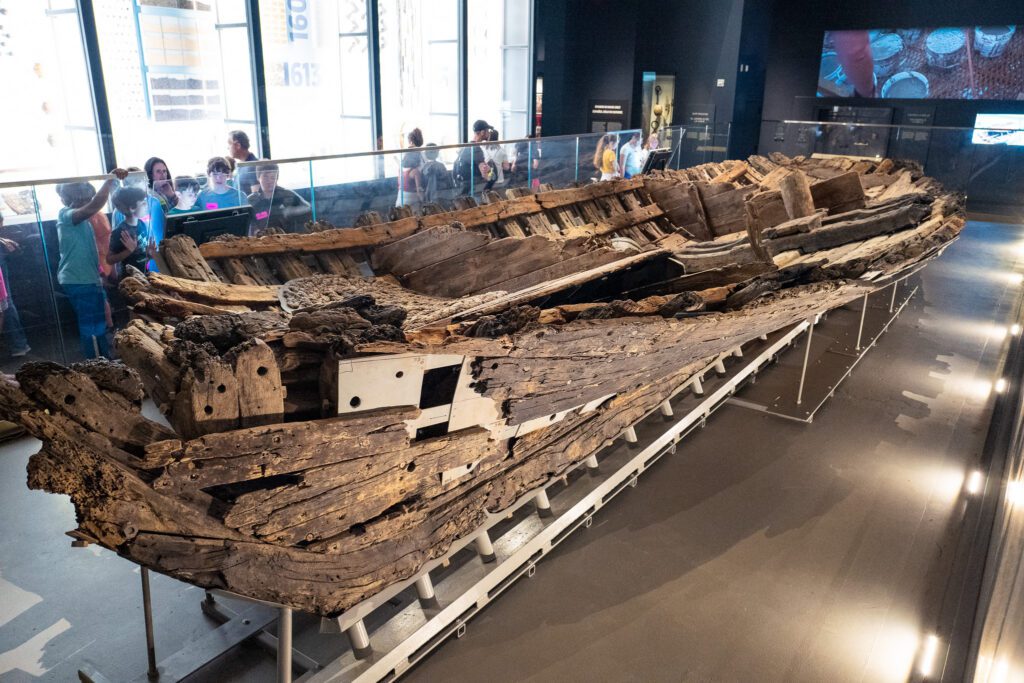
In 1996, divers discovered the wreck of the La Belle in Matagorda Bay. In an extreme feat of recovery, what remained of the hull was recovered, along with over a million artifacts. Those artifacts are housed at the Bullock Museum of Texas History in Austin, where the stabilized remains of the hull are the centerpiece of the exhibits.
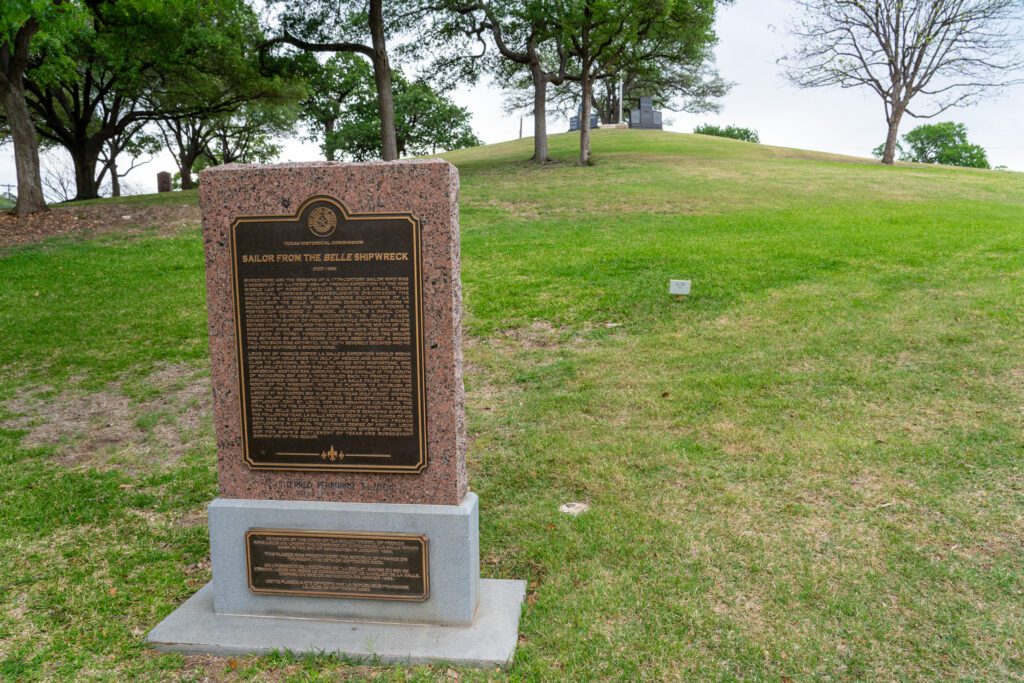
In closing, because of circumstances surrounding the failed colony, no human remains existed. The bodies in fields were eaten by scavengers, and graves were unmarked. That is until the La Belle was discovered. During the excavation of the ship, human remains were discovered. After receiving permission from the French government, the remains were buried in Texas. If the reader goes to the Texas State Cemetery in Austin, they should go up the hill immediately visible when they come through the gates. At the foot of that hill are the remains of one of the men of the La Belle. Although unknown, he was one of the first Europeans to set foot in Texas with the intention of permanently settling. Coincidently, at the top of the same hill is the grave of Gene Cernan, the last man on the moon. Two explorers from different centuries, and lands forever linked by discovery.