
Blog
Indiana Celebrates 226 Years on May 7
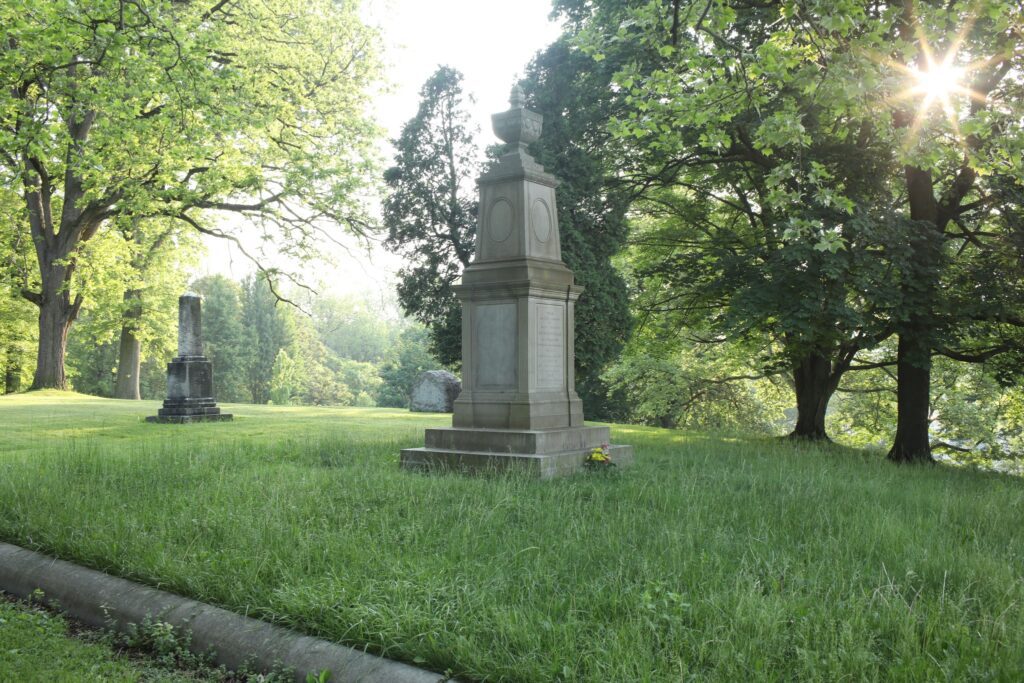
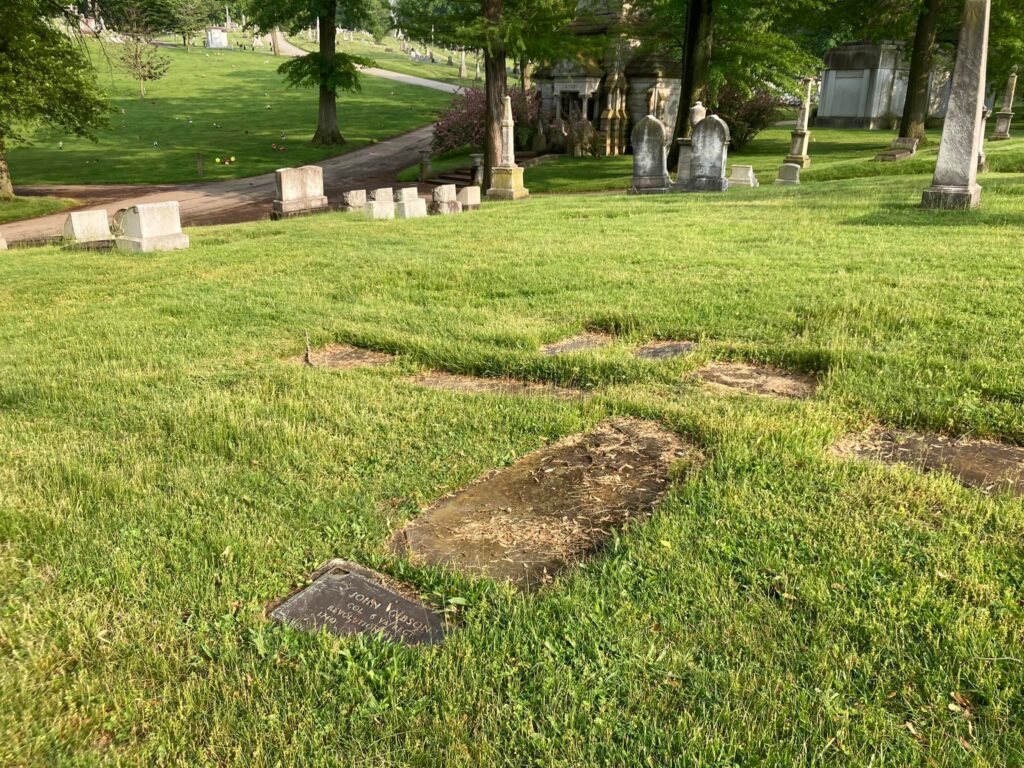
John Gibson is buried in Carroll County, near Lafayette.
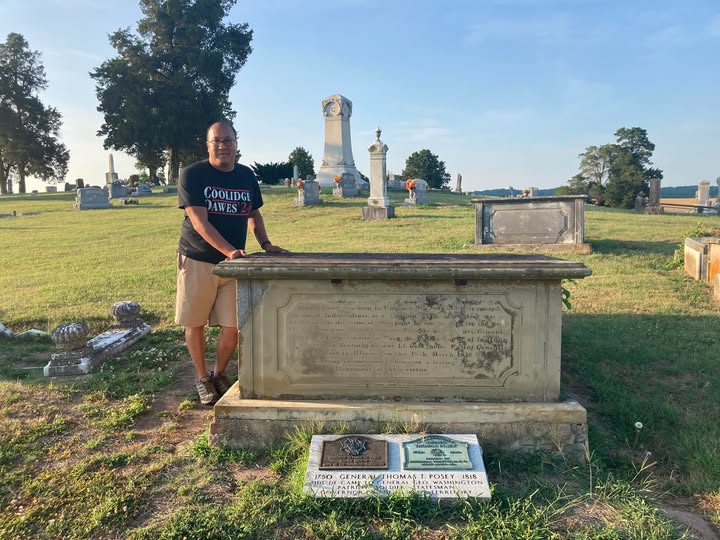
Photos courtesy Andy Chandler
On May 7, Indiana will be celebrating the 226th anniversary of its establishment as a territory, with its current established boundaries. In 2022, I set out to visit the grave of every Indiana governor. It was an enlightening journey and helped me understand history through their perspective and the times in which they lived. How did Samuel Bigger attempt to balance a deficit? How did Oliver P. Morton keep the State together despite it barely electing Lincoln in the 1860 election? These are the men who have governed Indiana, the state. However, who made it a state?
According to the Northwest Ordinance of 1787, statehood could be achieved by two qualifiers. 1) A voting population of 60,000 people or more. 2) Ratification of a State Constitution.
There were four men who held the position of governor of the Indiana Territory before it became a state. As one would expect, I’ve been to their graves. I’ll skip William Henry Harrison since he’s been covered.
General Arthur St. Clair. Before Indiana was a Territory, it was part of the Northwest Territory, and St. Clair was its governor. Despite experience as the president of the Continental Congress (1787) he proved ineffective and commanded the worst military defeat of U.S. forces by Native Americans in 1791 at Ft. Recovery. The one silver lining of his administration was that he was absent enough that Territorial Secretary William Henry Harrison was able to get administrative experience for his future role in Indiana.
St. Clair is buried in Greensburg, Penn., next to a concert venue in a park. Originally founded as Old St. Clair Cemetery in 1818, the property was abandoned in 1888. Eventually the city took over and in 2002 made it into a park. Most of the interments went to other cemeteries, but St. Clair stayed.
Thomas Posey. Posey spent his childhood as George Washington’s next-door neighbor. He was a veteran of the Revolutionary War. During the Revolution and ensuing Indian Wars, he was a staff officer with General “Mad” Anthony Wayne.
Posey was appointed territory governor in 1813 to replace William Henry Harrison. As governor, he organized the court jurisdictions and approved the State Bank. Scorned by most of the legislature for his pro-slavery leanings, he lost to Jonathon Jennings in 1816 in his bid to be the first state governor. He spent the last two years of his life as an Indian Agent in Southern Illinois. He is buried in a cemetery outside of Shawneetown, Ill.
John Gibson. Gibson was appointed governor general at the tender young age of 60 and served in that role from July 1800 to January 1801 when Harrison arrived in Vincennes. As territorial secretary, he was somewhat of a filler when Harrison was out of town and in the interim 1812-13 period between Harrison and Posey. Gibson’s language skills proved invaluable during Harrison’s treaty negotiations with the Native Americans. His final act as governor was to oversee the move of the territorial capitol from Vincennes to Corydon in 1813.
Gibson remained Indiana Territory Secretary until statehood in 1816. He returned to Pittsburg, Ind. and died in 1822. For having a significant role in Indiana history, his grave marker in Allegany Cemetery is rather unobtrusively placed on the side of a hill.
In the State Archives are documents preserved in a temperature-controlled room pertaining to this time. To my surprise, the territorial seal has the presidential eagle on it, a reminder of Indiana’s territorial years. More than likely, these documents were drafted by Gibson.